


Online Math & Science Tutoring with Tan Lam
Hello, my name is Tan Lam, and I am excited to help your child(ren) with online tutoring in math and science. I bring 26 years of experience teaching high school and college students, both in-person and online. I am passionate about life-long learning and sharing knowledge while fostering students’ intellectual, social, and emotional growth.
I monitor and adapt my teaching to match each student’s learning rate, level, and style, ensuring lessons are both effective and engaging. Sessions are offered via Microsoft Teams, Google Meet, or Zoom.

One-on-one tutoring allows students to focus on specific subjects or skills, building confidence and achieving measurable progress.
$50/hour (may vary based on subject and preparation time)
Prorated sessions lasting 30 minutes to 2 hours
You only pay for the time spent tutoring
Email is preferred for initial inquiries. Thank you for considering me to support your child’s learning journey!

Tan Lam – Educator, Scientist, and Founder of the Seattle Mini Medical School (SMMS)
My name is Tan Lam, and I have been teaching high school math and science for 26 years. Before becoming a teacher, I spent ten years as a research scientist, including graduate studies at Dartmouth Medical School, where I investigated T cell responses to retroviruses. My research was published in respected medical journals, including the American Journal of Medical Genetics, Journal of General Virology, Cellular Immunology, Viral Immunology, and Experimental Cell Research. I hold a Master’s Degree in Biochemistry from Dartmouth College.


After graduate school, I returned to my alma mater to teach science, intending to teach for a few years before pursuing a medical doctorate. That was 25 years ago, and teaching became my true calling.

Why teaching? As a former refugee and English language learner, I received tremendous support from schools, teachers, and nonprofit organizations. My teachers went the extra mile to help me succeed. I feel a deep sense of gratitude and a responsibility to give back. Becoming a teacher has allowed me to help students who are “average” or at-risk—students like I once was—achieve academic success, attend college, and pursue their American Dream.
As my teaching career winds down, I have been reflecting on the legacy I want to leave. In 2019, the Washington State Board of Education approved the Tu Luong Medical Mission Foundation to establish the Seattle Mini Medical School (SMMS). SMMS provides a full curriculum for grades 6–12, blending STEM education with medicine and medical mission. It is designed for students serious about careers in healthcare.
Through SMMS, students gain early exposure to the science of medicine, clinical skills, and real-world medical experiences that foster compassion and service. My ultimate goal is to guide, encourage, and educate future physicians, dentists, pharmacists, nurses, and other healthcare professionals to care deeply for the poor and needy, both locally and globally.
My journey—from refugee to scientist, teacher, and mentor—has been shaped by the support of others and a commitment to giving back. Through SMMS, I hope to inspire the next generation of compassionate healthcare leaders.

Email is preferred for initial inquiries. Thank you for considering me to support your child’s learning journey!


Modeling Cancer Progression in Mice
Cancer cells often develop through a progressive sequence: from normal cells, to pre-cancerous, to transformed, then to local metastasis, followed by metastatic disease, and finally aggressive metastatic disease.
Researchers have created a series of mouse cell lines that mimic this stepwise progression. These sequentially developed cell lines allow scientists to study the molecular changes, behaviors, and treatment responses that occur at each stage of cancer development. This model provides valuable insights into how cancer evolves and spreads, helping guide strategies for early detection, prevention, and therapy.
Durwood Barber Ray, Ph.D., Gerald A Merrill, Ph.D., Frederic J Brenner, Ph.D., Laurie S Lytle, Tan Lam, et al “T24 HRAS Transformed NIH/3T3 Mouse Cells (GhrasT-NIH/3T3) in Serial Tumorigenic Passages Give Rise to Increasingly Aggressive Tumorigenic Cell Lines T1-A and T2-A and Metastatic Cell Lines T3-HA and T4-PA.” Experimental Cell Research 340, 1-11, 2016.


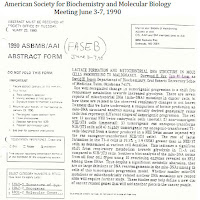
Ray, D. B., Lam, T. M. and Jones, D. H. "Lactate Formation and Mitochondrial DNA Structure in Mouse Cells Progressing to Malignancy." Federation Proceedings, 48 (1990) 763A.
Medical Genetics Research – Fragile X Syndrome
After completing my undergraduate studies, I worked full-time at Children’s Medical Center in Tulsa, where I studied Fragile X Syndrome. Our research focused on mapping the FRAXA chromosome using six polymorphic loci: DXS369, DXS297, DXS296, DXS304, IDS, and DXS374.
We conducted genetic linkage analysis on 32 Fragile X [fra(X)] families using 12 polymorphic loci, including these new markers. By combining cytogenetic and molecular data in two-point linkage analysis, we were able to estimate lod scores and carrier probabilities for potential carriers.
The introduction of these six new marker loci significantly changed the carrier risk estimates for members of 7 of the 32 families compared to previous estimates based on less closely linked probes available before 1989. I was a co-author on this study, which was published in the American Journal of Medical Genetics, Volume 43, pages 312–319 (1992).
Carpenter, Nancy J., Swart-Boyd, Jennifer, Prichard, Jane K., Lam, Tan M. "Linkage and risk assessment in fragile X families using new DNA probes at Xq27." American Journal of Medical Genetics 43, 312-319, 1992.


Immunology and Virology Research
As a graduate student, I completed three laboratory rotations focused on: Studying viral enhancers in leukemia specificity. Investigating cholesterol acyltransferase (ACAT). Examining gamma interferon (IFN-γ) regulation of MHC class I gene expression I was a co-author on the study of gamma interferon, published in Cellular Immunology (150:90–100, 1993).
For my thesis, I focused on epitope variation in cytotoxic T lymphocyte (CTL)-resistant murine leukemia viruses, identifying minor and major epitopes. This research required me to analyze experimental results independently, design follow-up experiments, modify techniques, and troubleshoot technical problems.
My work led to two publications:
Viral Immunology 7:51–59, 1994
Journal of General Virology 76:635–641, 1995
Through these experiences, I developed strong skills in molecular immunology, virology, experimental design, and problem-solving in complex laboratory research.
Hillary D. White, Douglas A. Roeder, Tan M. Lam, and William R. Green. "Major and Minor Kb-Restricted Epitopes Encoded by the Endogenous Ecotropic Murine Leukemia Virus AKR623 That Are Recognized by Anti-AKR/Gross Virus CTL." Viral Immunology 7, 51-59, 1994.


Publications:
Tan M. Lam, Michael A. Coppola, Rendall R. Strawbridge and William R. Green. "Recognition of Endogenous Ecotropic Murine Leukemia Viruses by Anti-AKR/Gross Virus CTL." J. of General Virology 76, 635-641, 1995.


